
A Year Around the World Changed How I See Strategy
What Traveling Without a Fixed Plan Taught Me About Strategy With One
In 1982, three years out of graduate school, my wife and I quit our jobs and left.
Not impulsively. We’d been watching what happened to people who kept saying they’d travel later, after the kids were grown, after the promotions came, after the medical situation resolved. Later has a way of not arriving. We were young, healthy, and unencumbered. We didn’t want to be like companies that have five-year plans that never materialize.
One year. Europe first, then Israel, Egypt, India, Nepal, Thailand, Singapore, Hong Kong, and Japan. We planned for as much as we could. Paris on Bastille Day, Jerusalem on Christmas, New Delhi on India’s Independence Day, and Singapore for Chinese New Year. We planned those moments deliberately. Almost everything else we made up as we went.
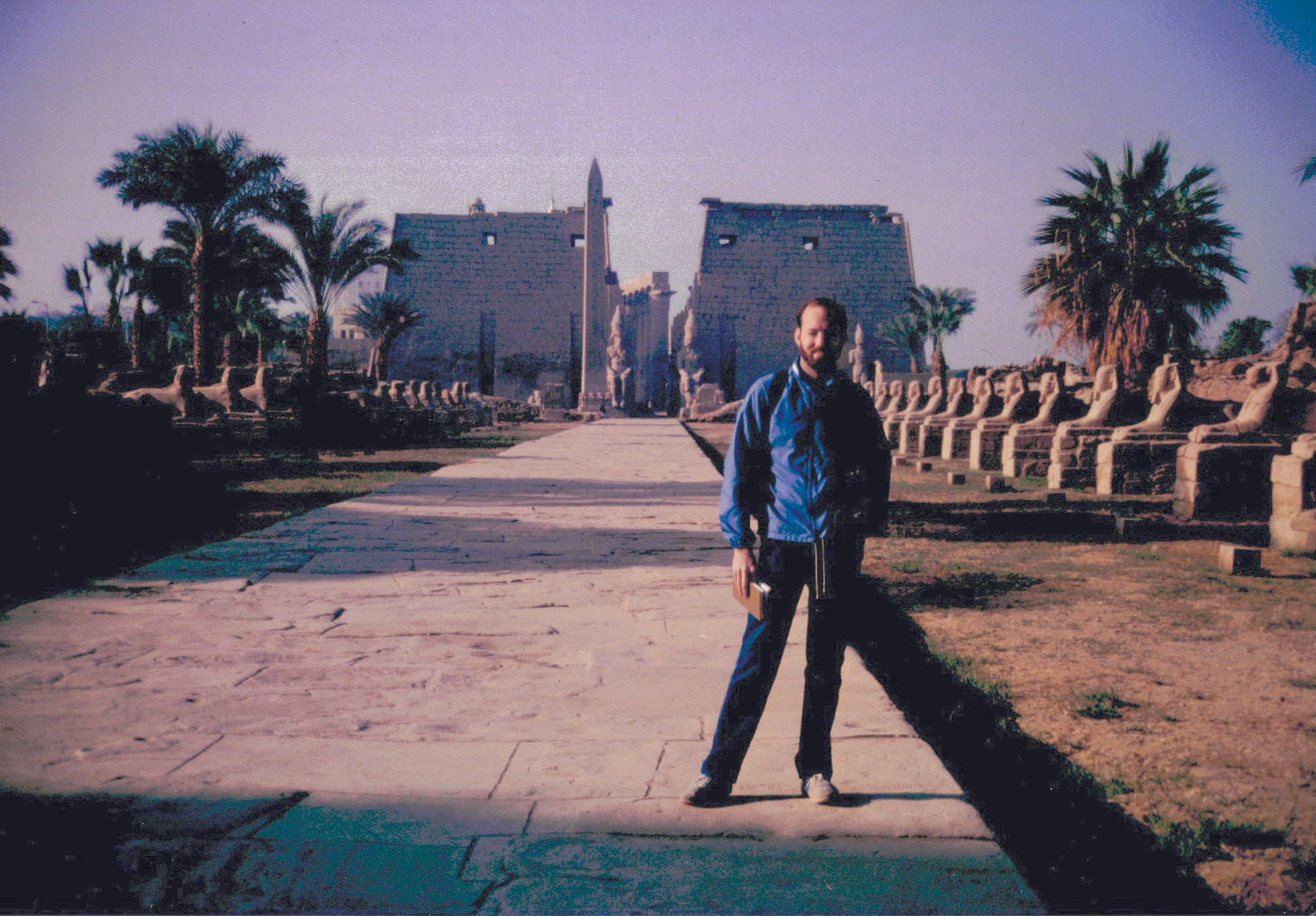
THE PLAN WE MADE AND MOSTLY IGNORED
We did real planning before we left. Torn-up guidebooks. Research on each country. A general sense of where we wanted to go and what we wanted to see. We had goals: experience as much as possible, stay long enough in each place to actually understand it, and don’t treat travel as a checklist.
What we didn’t do was lock in a route. We had a direction, not a schedule.
That distinction mattered more than I expected. We made fewer mistakes than we would have on a fixed itinerary, not more. When the weather changed, we changed. When someone we met told us about a village we’d never heard of, we went. When we arrived somewhere and it wasn’t what we’d imagined, we moved on. When it was extraordinary, we stayed longer.
This kind of flexibility wasn’t laziness. It was how we got the most out of the trip. The plan gave us a framework. The conditions gave us the actual route.
We planned extensively, but we didn’t expect the plan to survive contact with reality unchanged. That expectation was the strategy.
THE MOMENT IN NEW DELHI
India was our favorite country. Nothing prepares you for it: the scale, the color, the noise, the history compressed into every surface. We arrived expecting differences and found them in every direction.
One afternoon near a public fountain in New Delhi, I watched a woman bathing her infant. She had nothing but a small container for water and a cloth. She worked with complete focus, the way a mother works when the task is the whole world.
It stopped me. Not because of what was different, but because of what wasn’t. This was the same as it would be in any place or time. The circumstances may have been different but the love was not.
Every company I’ve worked with since has that quality. The surface looks different: industry, culture, competitive position, and leadership team. But underneath the fundamental needs are the same. They want to understand their situation honestly and see genuine options. They want to know whether the direction they’ve chosen will actually hold up.
The BUILD engagement looks different for every organization because every organization’s situation is different. The framework is the same. The output has to be theirs alone.
You can’t use another company’s BUILD deliverables any more than you can use another family’s map of their own life.
WHAT THE TRIP TAUGHT ME ABOUT PLANNING
We got things wrong. For some countries we planned too little and felt it. Some we over-planned and lost the spontaneity that made other places memorable. We adjusted both directions as we went.
By the time we reached Japan, nearly a year in, we were much better at this than when we’d left Washington. We’d learned to read conditions faster. We knew our own patterns: what depleted us, what energized us, when to push and when to stop. We trusted the framework we’d built at the beginning and held the specific plans loosely.
Strategy works the same way. The framework is the strategy cascade, the problem statement, the validated assumptions, and the CEO Summary. Those are the equivalent of knowing you want to be in Paris on Bastille Day.
Everything else is adaptive. Who do you talk to in the stakeholder interviews? What do you learn from the customer conversations that changes your assumptions? Which priority uncertainties turn out to be more or less load-bearing than you thought when you named them?
The discipline isn’t following the plan. It’s knowing which parts of the plan are worth holding and which parts are placeholders waiting for real information.
THE PEOPLE YOU DIDN’T KNOW YOU’D MEET
We had no idea who we would meet along the way. That uncertainty was part of the point. The people we encountered, in small hotels, on trains, at temples we’d almost skipped, changed the trip in ways no itinerary could have produced.
A couple we met on a train in Italy pointed us toward a village that became one of the most vivid memories of the whole year. A traveler in Nepal described a route that turned out to be exactly right for where we were physically and mentally at that point in the journey. The couple we met in Thailand invited us to dinner at their home in Hong Kong (turned out he was the head for security for Hong Kong). We couldn’t have planned for any of these.
In BUILD, the equivalent is the stakeholder interview that surfaces something you didn’t know to look for. The customer who describes their experience with your service in terms that don’t match how you’ve been thinking about. The partner who mentions a competitor move you hadn’t tracked. The former client whose departure turns out to have a specific, findable reason. You don’t know unless you specifically ask.
WHAT WE BROUGHT BACK
We came home different in ways that were hard to articulate at the time and obvious in retrospect.
I had a much cleaner sense of what was universal and what was specific. Human needs are universal. The form they take can be endlessly specific. That distinction shows up in every BUILD engagement. The framework applies everywhere. The deliverables belong only to the organization that produced them.
I also came back with a different relationship to planning itself. Not less rigorous. More honest about what planning can and can’t do. A plan is not a prediction. It’s a framework for making decisions as conditions reveal themselves. The better the framework, the better the decisions. We’ve heard the expression, “Don’t confuse the map for the territory.” The more we confuse the framework for the destination, the more brittle the whole thing becomes.
One year, almost twenty countries. A notebook full of observations and memories that turned out to be useful for decades.
We didn’t know exactly where we were going. We knew why we were going. That turned out to be enough.
Next week: The Strategy Cascade. How BUILD adapts Roger Martin’s five-level framework to translate strategic choices into a coherent architecture for where to compete and how to win.
ABOUT THE AUTHOR
Mark Haas is a strategy advisor to CEOs and boards of mid-market companies, with more than 30 years of experience across healthcare, defense, finance, social services, and biomedical research. He is the founder of Haas Strategy Solutions, a Certified Management Consultant, former Chair and CEO of the Institute of Management Consultants USA, and recipient of the IMC Lifetime Achievement Award. Mark also served as Ethics Officer for 20 years and holds degrees from Colgate and Harvard Universities.
Learn more about Mark | Connect on LinkedIn
Ready to build a living strategy that keeps pace with your market? Schedule a call.